
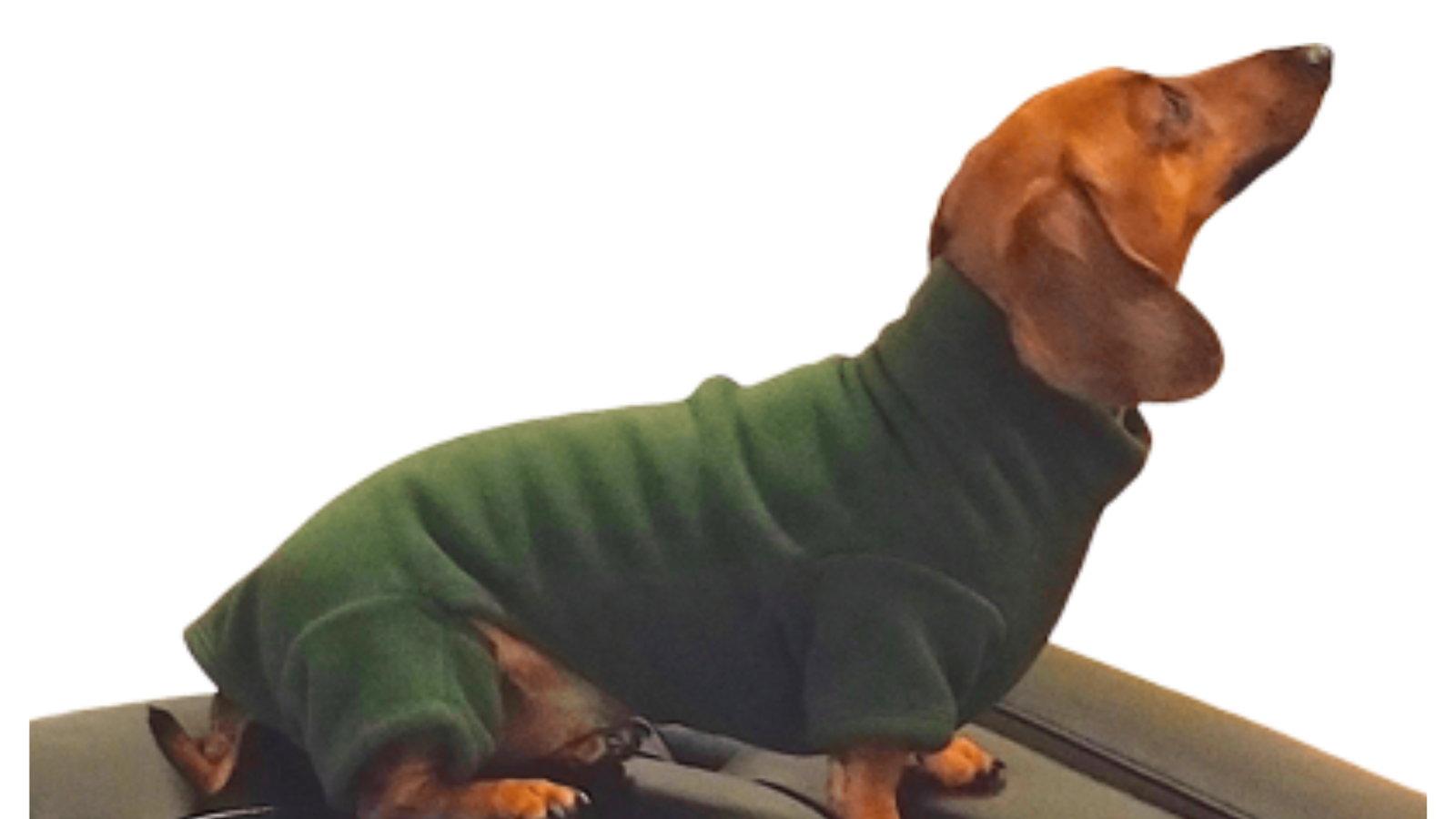
Have you ever bought “small dog” clothing for your Doxie that looked right but ended up riding up your dachshund’s back or rubbing under the arms?
If yes, you’ve hit the most common problem with dachshund apparel. Standard dog sizing is not built for the long back and deep chest of Dachshunds.
However, the fix is simple:
Next time, shop by measurements and fit features designed for Dachshund proportions, not by generic S/M/L labels.
Here is a blog that breaks down exactly why fit fails and what to buy instead so your doxie stays warm, comfortable, and free to move.
Why “Regular Dog Clothes” Fail on Dachshunds?
Dachshunds have different body shapes as compared to other dog breeds. Therefore, small size dog clothes do not fit them properly.
Here’s what typically goes wrong:
The length of the sweater is too short: The hem of generic sweaters stops mid torso leaving the belly and lower back exposed to the cold weather.
- The chest size does not match: Dachshunds have deeper chests so, most clothes feel tight and pinch them at the chest.
- The Armholes are rubbing: Tight or poorly placed openings can chafe behind the front legs and shorten stride.
- Belly panels are dragging low: Dachshunds are short and very close to the ground. So extra fabric of a sweater can collect under the belly and collect dirt, snow, and water.
- Twisting and sliding during walks: A garment that doesn’t “anchor” around the chest and torso will shift sideways, making the fit worse over time.
If you’re searching for well fitted clothes for dachshunds the goal isn’t “cute”it’s three things; the coverage, mobility and stability.
Measure Your Dachshund the Right Way
A good fit starts with three measurements. Do these with your dog standing naturally:
- Back length: From the base of the neck (where a collar sits) to the base of the tail.
- Chest girth: Around the widest part of the chest, usually just behind the front legs.
- Neck circumference: Around the base of the neck.
Then match your numbers to the brand’s size chart, not a general S/M/L guess. If your dachshund falls between sizes, prioritize chest girth first, then back length because chest restriction is what causes rubbing, resistance to wearing clothes, and poor movement.
What to Buy Instead: A Fit-First Checklist
When shopping for dachshund clothing, look for construction details that solve the breed-specific fit problems:
- Longer back coverage: The garment should cover most of the torso without pulling forward at the chest.
- Chest-friendly shaping: A cut that accommodates a deep chest without squeezing (often with a curved front or flexible chest panel).
- Stretch where movement happens: Fabrics with gentle give (or strategic stretch panels) help your doxie walk, sit, and climb without the outfit riding up.
- Stable torso fit (anti-twist): Pieces that fit smoothly along the ribcage are less likely to rotate sideways.
- Clean, comfortable seams: Flat seams or smooth interior finishing reduce irritation behind the front legs.
- Easy on/off without harsh hardware: Too many stiff fasteners can create pressure points and snag fur.
- Practical clearance: Ensure the belly area doesn’t hang low and that potty breaks are hassle-free.
Use this checklist to choose the right type of garment too:
- Cold weather: insulated or fleece layers with full torso coverage
- Rainy walks: a lightweight shell that keeps the belly drier
- Indoor chill: soft, breathable layers that don’t overheat
Where to Buy Clothes for Dachshunds ?
If you’re wondering where to buy clothes for dachshunds, the most consistent results come from breed-specific sellers that pattern garments around long backs and deep chests (instead of adapting generic small-dog templates). These shops typically offer size charts that include back length and chest girth, plus designs that reduce twisting and riding up.
Look for sellers that:
- clearly label items as designed for dachshunds (or “long-backed breeds”),
- provide detailed measurements (not only weight ranges),
- show fit photos on dachshunds, and
- offer reasonable exchanges if your dog falls between sizes.
Examples of breed-focused options include dachshund-specific boutiques and dedicated dachshund apparel brands; one example is Houndz in the Hood, which provides apparel specifically for dachshund sizing.
Conclusion
Bad dachshund clothing isn’t a style issue—it’s a patterning issue. A long back, deep chest, and low stance expose every weakness in generic small-dog sizing, which is why so many outfits ride up, twist, or rub. The reliable solution is to measure first and shop for dachshund-shaped features: longer coverage, chest-friendly cuts, stable torso fit, and comfortable movement.
Do that, and you’ll stop wasting money on “almost fits” and start buying clothes for dachshunds that your doxie can wear comfortably on walks, at home, and in real weather.
 Kate Willson