
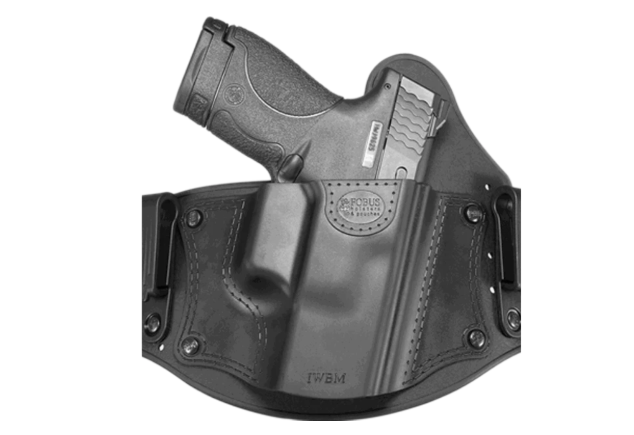
In the realm of private security, preparedness and discretion are paramount. Security personnel are often tasked with operating in both high-visibility and plainclothes roles, requiring gear that balances accessibility, concealment, and comfort. One of the most critical components of a security officer’s everyday carry setup is the holster.
Among the available options, the inside the waistband holster (IWB) is increasingly recognized as the optimal choice for private security professionals. Compared to traditional external options such as the owb holster, the IWB offers distinct tactical, ergonomic, and professional advantages that align with the operational demands of modern-day private protection roles.
The Need for Discreet Carry in Private Security
Unlike uniformed law enforcement officers, private security personnel—particularly those working in executive protection, asset transport, or undercover surveillance—often operate in low-profile capacities. In such roles, discretion is not just preferred, but required.
The inside the waistband holster offers near-complete concealment by positioning the firearm between the body and the waistband of the trousers. This eliminates visible printing and prevents alerting others to the presence of a weapon, preserving a non-threatening appearance while maintaining readiness.
By contrast, the owb holster, which rides on the outside of the belt, is far more likely to be visible under light clothing or during movement. This visibility can compromise operational discretion, especially in environments like hotels, corporate buildings, or public events.
Faster Draw With Enhanced Retention Control
While concealment is essential, a holster must also allow quick and reliable access to the firearm. Contrary to the misconception that IWB holsters are harder to draw from, trained professionals often achieve faster draw times due to the proximity of the weapon to the body’s centerline and reduced external movement.
Key draw benefits of IWB holsters include:
- Natural body positioning during the draw stroke
- Shorter reach distance compared to OWB counterparts
- Minimal interference from environmental obstacles
In addition, many modern IWB holsters feature adjustable retention systems, allowing personnel to fine-tune how tightly the weapon is secured. This ensures both safety and speed—two critical elements in a security context.
Comfort During Extended Wear
Private security work frequently involves long hours of standing, walking, and sitting. Holster comfort is not a luxury but a necessity to prevent fatigue and maintain focus.
Well-designed inside the waistband holsters provide:
- Low-profile construction that conforms to the body’s shape
- Minimal bulk under uniforms or suits
- Sweat guards or body shields to reduce discomfort
- Clips and loops for adjustable ride height and cant
Compared to the owb holster, which may press against car seats, furniture, or body armor, IWB holsters are more integrated into the wearer’s clothing. This translates to better comfort during long shifts and reduced printing even while seated or bending.
Legal and Professional Compliance
In many jurisdictions, open carry by private security personnel is restricted, and concealed carry protocols are tightly regulated. The inside the waistband holster allows security professionals to comply with legal concealment requirements while maintaining quick access to their firearm.
Moreover, in sectors like corporate security or executive protection, visible weapons can create unnecessary tension or concern among clients and the public. A concealed IWB setup presents a polished, professional image while preserving tactical readiness.
Versatility Across Dress Codes
One of the greatest advantages of an IWB system is its compatibility with a variety of clothing styles. Whether a security professional is dressed in tactical gear, formal business attire, or casual plainclothes, the IWB holster can be concealed and adjusted for comfort and accessibility.
It can be worn at multiple positions:
- Appendix carry (AIWB) for fast, forward-positioned access
- Strong-side carry for traditional draw familiarity
- Cross-draw for seated access in vehicles
This adaptability is crucial for private security personnel who may shift between assignments requiring different attire and postures throughout the day.
Comparisons With OWB Holsters
While the owb holster offers advantages in open carry scenarios—such as greater weapon accessibility and reduced body contact—it is generally more suited for uniformed roles or range environments. For private security applications, where discretion, adaptability, and professional appearance are top priorities, OWB options often fall short.
OWB holsters:
- Are harder to conceal under light clothing
- May require larger cover garments
- Can be susceptible to snatching or accidental exposure
In contrast, the inside the waistband holster remains secure, concealed, and less vulnerable to external interference—a significant advantage in crowd management, close-contact scenarios, or discreet surveillance operations.
Final Thoughts
For private security personnel, equipment must enhance performance without drawing unnecessary attention. The inside the waistband holster delivers this balance—offering effective concealment, comfort for extended wear, and quick, secure access in critical moments.
While the OWB holster has its place in specific settings, it often lacks the versatility and discretion demanded by private-sector security professionals. As roles continue to evolve in both tactical and civilian environments, the IWB holster stands out as the most practical and professional option for those tasked with protecting others while remaining tactically prepared and visually unobtrusive.
 David Martinez
  Kate Willson