
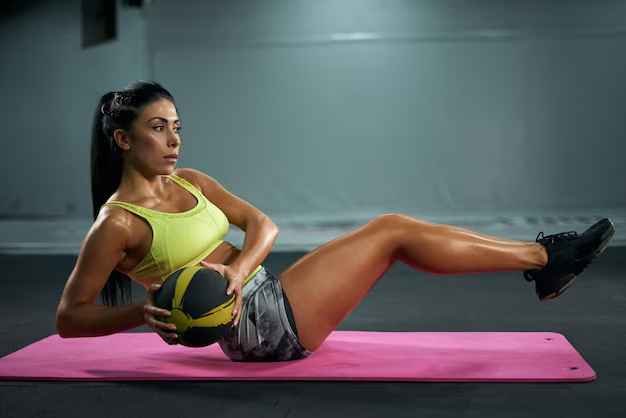
If you’re tired of floor exercises and looking for a faster, more practical way to train your core, you’ve probably come across standing crunches for abs. These workouts promise results without lying down—but do they actually deliver? The short answer: yes, but not in the way most people expect. Many assume standing exercises are inferior to traditional crunches, but that’s a shallow take. The real question isn’t whether they work—it’s what they’re actually good for. If your goal is functional strength, balance, and core stability, standing abs workouts are effective. If your goal is a defined six-pack, they’re only one piece of the puzzle.
What Are Standing Crunches for Abs?
Standing crunches are core exercises performed upright instead of on the floor. They involve controlled movements such as knee-to-elbow crunches, oblique side bends, and rotational twists. Unlike traditional crunches, these exercises require your body to stabilize itself while moving, which changes how your muscles engage.
Instead of isolating just the abdominal wall, standing exercises recruit multiple muscle groups at once, including your hips, lower back, and even legs.
Do Standing Abs Workouts Work?
Let’s get straight to it—do standing abs workouts work? Yes, but only if you understand their limitations.
They Train the Entire Core System
Standing workouts engage more than just your visible abs. Your body has to maintain balance, which activates deeper stabilizing muscles. This makes them more functional compared to basic floor crunches.
They Improve Real-World Strength
Most daily movements—walking, bending, twisting—happen while standing. These exercises mimic real-life motion, making your core stronger in practical situations, not just in the gym.
They Focus More on Stability Than Size
Here’s where people misunderstand things. Standing abs workouts improve endurance, coordination, and balance, but they’re not the best for building thick abdominal muscles. That requires resistance and progressive overload.
Key Benefits of Standing Crunches for Abs
Better Core Activation
Because your body is constantly stabilizing, your core stays engaged throughout the movement rather than switching on and off like in traditional crunches.
Low Impact on Joints
No strain on your neck, spine, or wrists. This makes standing exercises a solid option for beginners or people with discomfort doing floor workouts.
Burns More Calories
Standing movements often involve larger muscle groups and dynamic motion, which can increase calorie burn compared to static ab exercises.
Improves Balance and Coordination
You’re not just training your abs—you’re training how your body moves as a whole.
Limitations You Shouldn’t Ignore
Most online content oversells these workouts. Here’s the reality.
Not Enough for Visible Abs
If your goal is a six-pack, standing crunches alone won’t get you there. Visible abs depend heavily on low body fat, not just exercise selection.
Limited Muscle Growth
You can’t easily add heavy resistance while standing and balancing. Without progressive overload, muscle growth is limited.
Form Matters More Than You Think
If you rush through reps or rely on momentum, your core barely works. Most people end up using their hips instead of their abs.
Best Standing Crunches for Abs
If you’re going to include these in your routine, use exercises that actually challenge your core.
Standing Oblique Crunch
Targets the side abs and improves control during bending movements.
Cross-Body Knee Drive
Engages upper and lower abs while forcing balance and coordination.
Standing Bicycle Crunch
A more dynamic version of the classic bicycle crunch, requiring full-body stability.
Standing Woodchoppers
A rotational movement that strengthens the obliques and improves twisting power.
How to Make Standing Abs Workouts Effective
This is where most people mess up. Fix these and you’ll actually see results.
Slow Down Your Reps
Fast reps rely on momentum. Slower movements force your core to stay engaged.
Focus on Muscle Contraction
If you don’t feel your abs working, they’re probably not doing much. Mind-muscle connection matters here.
Add Resistance
Use dumbbells, resistance bands, or cables to increase intensity. Bodyweight alone won’t take you far.
Combine With Other Core Training
Relying only on standing exercises is inefficient. Pair them with weighted and floor-based exercises for better results.
The Reality Check
Standing abs workouts are useful—but they’re not a shortcut.
They help with:
- Core stability
- Balance
- Functional strength
They don’t guarantee:
- Visible abs
- Rapid fat loss
- Significant muscle growth
If you’re expecting a dramatic transformation from short standing workouts alone, you’re setting yourself up for disappointment.
Conclusion
Standing crunches for abs absolutely have value, especially for improving stability, coordination, and functional strength. However, they shouldn’t be treated as a complete solution. If your goal is a strong and defined core, you need a combination of resistance training, proper nutrition, and overall fat loss.
So yes—standing abs workouts do work. But only when used correctly and combined with a smarter, more complete approach.
 Kathie