
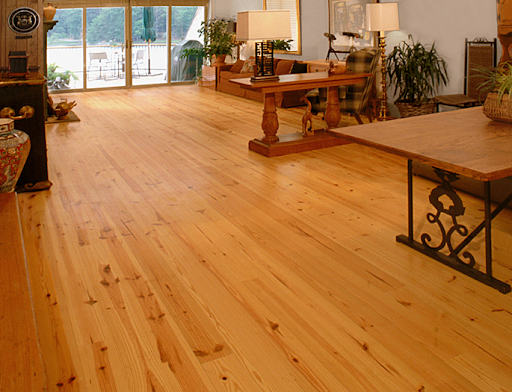
Hardwood floors in 200-year-old homes are still standing today. That’s not an accident. Solid prefinished hardwood flooring averages 75 to 100 years under normal residential conditions and can be refinished 5 to 10 times over its life, compared to engineered hardwood’s 1 to 3 refinishes. That difference is what makes solid hardwood a genuine long-term investment rather than a flooring choice you revisit in 20 years. The exact lifespan depends on species hardness, humidity control, installation quality, and how well the floor is maintained over time.
Average Lifespan by Wood Species
Species hardness is the single biggest factor in how long a hardwood floor lasts under daily use.
Domestic Hardwoods
Oak and maple sit in the Janka hardness range of 1,000 to 1,300. At this hardness level, a properly maintained floor in a standard residential setting reliably lasts 75 to 100 years or more. These species handle moderate foot traffic, furniture movement, and occasional scrapes without denting or wearing through the finish prematurely.
Exotic and High-Janka Species
Hickory sits at 1,820 on the Janka scale, while harder exotic species like Brazilian walnut reach 3,600. In high-traffic homes, these species routinely last 100 to 150 years before requiring significant attention. The denser the wood fibre, the more resistance it offers to surface compression, scratching, and finish wear across decades of use.
It’s worth noting that historic homes across the northeastern United States still carry their original white oak floors from the 1800s. This demonstrates that 200-year lifespans are achievable with the right species, installation, and care combination.
Factors That Shorten Lifespan
Several variables cut lifespan significantly, even when a quality product is installed correctly.
1. Wood Species and Hardness
Softer domestic species like pine sit as low as 380 on the Janka scale. At that hardness level, dents from furniture legs, high heels, and pet claws accumulate quickly. In addition, softer woods require more frequent refinishing cycles, which reduces the total number of refinishes available over the floor’s life.
2. Humidity and Temperature Fluctuations
Wood expands and contracts with changes in moisture content. The ideal indoor relative humidity range is 30 to 50%. Outside this range:
- Too humid: Boards cup and lift at the edges
- Too dry: Gaps and cracks develop between boards
- Inconsistent swings: Repeated movement weakens the board structure over time
Humidity problems are responsible for a significant proportion of premature hardwood floor failures and can reduce expected lifespan by 20 to 50%, depending on severity.
3. Traffic Levels and UV Exposure
High-traffic corridors and entryways wear finish faster than low-traffic rooms. Area rugs in these zones extend finish life by absorbing impact and abrasion directly. UV exposure from direct sunlight fades wood colour and breaks down the finish over time. Window coverings and UV-filtering film reduce this effect without compromising natural light.
4. Finish Quality
Solid prefinished hardwood flooring carries a UV-cured aluminum oxide finish applied under factory conditions. This finish is significantly harder and more consistent than site-applied finishes and typically lasts 20 to 25 years before the first refinish is needed. Site-finished floors, by contrast, often require refinishing within 8 to 10 years, depending on traffic.
Lifespan Comparison at a Glance
| Species or Factor | Expected Lifespan | Key Consideration |
| Oak or Maple (Domestic) | 75 to 100 years | Suited to moderate traffic homes |
| Hickory or Exotic Species | 100 to 150 years | Best choice for high-traffic areas |
| Poor Humidity Control | Reduces lifespan by 20 to 50% | Use a humidifier or dehumidifier seasonally |
| Professional Installation | Adds 20 to 30 years | Acclimate wood for 2 weeks before fitting |
Maintenance Practices That Maximize Lifespan
Consistent maintenance extends the finish’s life and delays the refinishing timeline significantly.
Daily and Weekly Care
Small habits make the biggest cumulative difference over decades:
- Dry-mop daily: Sweep or dry-mop high-traffic areas to prevent grit from abrading the finish over time.
- Use the right cleaner: Apply a hardwood-specific cleaner with a damp cloth rather than a wet mop.
- Avoid steam mops: Sustained moisture penetrates the finish and reaches the wood beneath, accelerating wear.
- Protect furniture contact points: Place felt pads under all furniture legs and replace them when they compress flat.
Refinishing Schedule
Refinish every 10 to 20 years based on visible finish wear rather than a fixed calendar. Refinishing too early wastes wear layer, while waiting until the wood itself is exposed risks deeper damage requiring greater sanding depth.
Each refinish removes a thin layer of wood. A standard thickness solid hardwood board supports 5 to 10 refinishes over its life. As a result, the total refinish potential is one of the most important practical advantages solid hardwood carries over engineered alternatives.
Pre-Installation Moisture Testing
Testing subfloor moisture content before installation is one of the most impactful steps a homeowner can take. Installing over an elevated-moisture subfloor causes cupping and premature failure regardless of product quality. Key steps include:
- Test before laying anything: Use a calibrated moisture meter on the subfloor before any boards are placed.
- Allow acclimation time: Leave the wood in the installation environment for two full weeks before fitting.
- Check subfloor flatness: Confirm the surface is flat to within 3/16 inch over a 10-foot span before installation begins.
This single preparation stage extends expected floor life by up to 30% according to installation industry standards.
Takeaway
A solid hardwood floor installed correctly, maintained consistently, and protected from humidity extremes will outlast the people who install it. Species selection sets the ceiling, installation quality sets the foundation, and daily care determines how close to that ceiling the floor actually gets.
Choosing the right species, installing correctly, and maintaining your floor properly are the keys to a long-lasting hardwood floor. Rustic Wood Floor Supply stocks domestic and exotic hardwood species across the full Janka hardness range with detailed guidance on species selection for every room type and traffic level. Every board here is sourced for quality that holds up over decades.
Browse the full range and choose a floor worth keeping for a lifetime.
 Kate Willson