
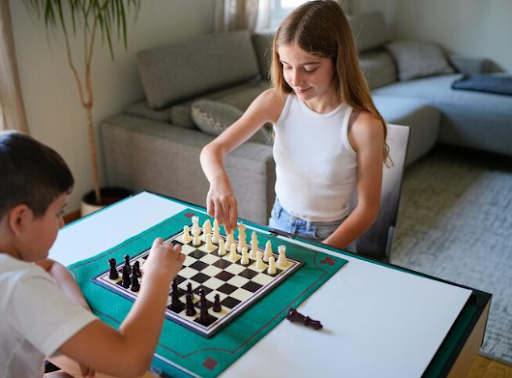
Strong chess development requires more than learning individual moves or memorizing opening sequences. Players who work with a chess teacher online can receive structured guidance that helps improve strategic thinking, board awareness, and decision-making. Consistent practice allows learners to understand positions more clearly, recognize important patterns, and develop habits that support stronger performance in different types of games.
Strategy helps players create meaningful plans, while board awareness allows them to recognize threats, opportunities, and positional changes. Combining these skills gives learners a more complete approach to chess and prepares them to handle increasingly complex situations with greater confidence and accuracy.
Building Strategic Awareness Through Structured Learning
Strategic awareness allows players to understand the purpose behind their moves instead of reacting only to immediate threats. It involves evaluating piece activity, pawn structures, king safety, space, and control of important squares. When these factors are considered together, players can create plans that remain useful even when the position changes.
A structured learning process introduces these concepts gradually and connects theoretical ideas with practical positions. This makes it easier for learners to recognize strategic patterns during actual games, understand positional priorities, and avoid decisions that may create weaknesses later.
- Control important central squares
- Develop pieces with clear purpose
- Evaluate pawn structures
- Improve piece coordination
- Consider long-term positional plans
Consistent attention to these principles helps players make more purposeful decisions. With practice, strategic awareness becomes a natural part of evaluating positions and planning future moves.
Improving Board Awareness During Every Game
Board awareness is the ability to monitor the entire board rather than focusing on a single area. Players need to notice threats, loose pieces, possible attacks, defensive resources, and changes in piece activity before deciding on their next move. This wider perspective reduces oversights and supports better calculations.
-
Scanning the Entire Board
Strong players regularly observe both their own pieces and the opponent’s pieces before committing to a move. Developing this habit helps learners notice tactical threats and positional opportunities that might otherwise remain hidden during complicated positions.
-
Recognizing Weak Squares
Weak squares can become important targets during a game. Understanding which squares lack adequate protection helps players create plans, improve piece placement, and restrict the opponent’s options. It also supports better decisions about where to establish long-term control.
-
Tracking Piece Activity
Active pieces generally have greater influence over the position. Players who monitor piece activity can identify poorly placed pieces and find ways to improve coordination. This encourages stronger development and helps every piece contribute meaningfully to the overall plan.
-
Watching Opponent Threats
Good board awareness includes understanding what the opponent intends to do. Before making a move, players should consider possible captures, attacks, checks, and strategic plans that could affect their position. Anticipating these ideas improves defensive preparation and reduces careless mistakes.
-
Improving Visual Calculation
Visualization allows players to imagine possible positions before moving a piece. Regular calculation exercises strengthen this ability and make it easier to evaluate several variations without losing track of the board. Better visualization also supports stronger tactical and strategic decisions.
Using Guided Learning to Improve Chess Decisions
A well-planned learning program can combine strategic lessons, tactical exercises, practical games, and position analysis to create a balanced learning experience. An online chess course allows learners to understand how different skills work together during actual games and apply them with greater confidence.
Guided learning also provides opportunities to review mistakes and identify areas that require additional practice. This approach encourages players to think critically about their decisions and develop stronger habits rather than simply memorizing recommended moves or copying established variations.
Practical Methods for Stronger Chess Development
Regular practice, tactical exercises, game analysis, and learning from mistakes can steadily improve chess skills. A focused training routine helps players build better calculation, strategic thinking, and decision-making abilities.
- Analyze completed games regularly
- Practice tactical positions consistently
- Study strategic master games
- Review difficult positions carefully
- Play games with focused objectives
These methods make practice more purposeful and help learners connect their study with practical gameplay. Consistent application gradually improves calculation, planning, pattern recognition, and board awareness. Advanced learners also benefit from comparing their decisions with alternative plans after each game. This reflective process reveals patterns in their thinking, highlights missed possibilities, and encourages more objective evaluation.
Developing Better Move Selection
Choosing a strong move requires more than identifying an attractive idea. Players need to compare possible moves, consider their opponent’s responses, and evaluate the resulting position. A thoughtful decision-making process reduces impulsive play and encourages reliable choices based on the demands of the position.
oA chess teacher online can provide feedback on this process by identifying recurring mistakes and explaining alternative appraches. Personalized guidance helps learners understand why certain moves work better in particular positions and develop a disciplined thought process that can be applied independently.
Creating Long-Term Improvement Habits
Chess development becomes more effective when players maintain a consistent routine. Improvement does not depend entirely on long study sessions. Focused practice, regular game analysis, and deliberate repetition can produce meaningful progress when performed consistently and with clear objectives.
A balanced routine should include tactical exercises, strategic study, practical games, and time for reviewing mistakes. Players can also track recurring weaknesses to ensure that their training remains focused on areas requiring the most attention.
- Set specific weekly learning goals
- Dedicate time to tactical practice
- Review completed games carefully
- Study different strategic positions
- Record recurring mistakes
Maintaining these habits creates an organized learning process. As players become more consistent, they can evaluate positions with greater confidence and apply learned concepts more naturally.
Conclusion
Strengthening strategy and board awareness requires patience, practical experience, and consistent learning. Players who understand positional principles while developing the ability to monitor the complete board can make thoughtful decisions and respond effectively to changing game situations. Regular practice, analysis, and focused guidance further support steady improvement.
For those seeking structured learning and expert guidance, Chessbrainz provides opportunities to develop practical chess skills through organized instruction. A well-designed chess course online can help learners improve strategic understanding, calculation, and board awareness while building confidence for every game and preparing them to approach more challenging positions with greater control and clarity.