
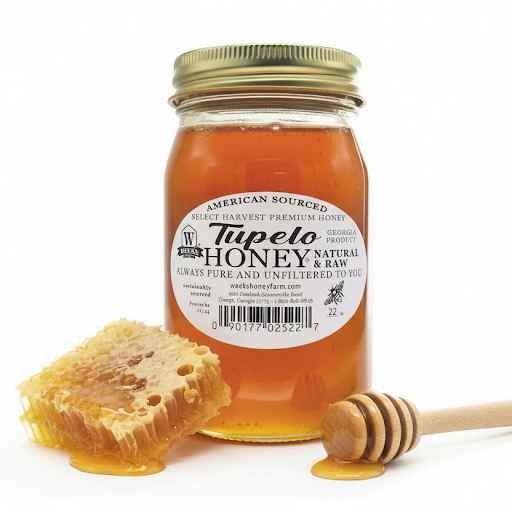
You have probably seen tupelo honey on a shelf and wondered whether the price is justified or just clever marketing. The honest answer is that it is genuinely different from regular honey in several measurable ways.
Tupelo honey comes from one of the most geographically restricted and harvest-dependent honey varieties in the world, and that scarcity is only one part of the story. The flavor, chemistry, and culinary performance are equally distinct. Here are seven differences that explain exactly why this honey commands a premium and why most people who try it agree it earns it.
1. Origin and Rarity
Tupelo is produced exclusively from white tupelo trees along river basins in parts of Florida and Georgia. The bloom lasts only a few weeks each spring, making it one of the most geographically restricted honeys in the world. Regular honey is sourced from clover, wildflower, and mixed blends across many regions and multiple seasons, keeping supply stable and broadly available year-round.
2. Harvest Difficulty and Risk
Beekeepers must position hives on raised platforms above swamps and rivers, timed precisely to a bloom that may last only days. A single week of bad weather or flooding can destroy an entire season’s yield.
Regular honey beekeepers have far more flexibility, moving hives between multiple sources and harvesting several times a year. As a result, production stays steadier and costs considerably less to manage.
What Most Commonly Destroys a Tupelo Harvest
- Unseasonal flooding of the river basin areas
- High winds or wet weather during the bloom period
- An unexpectedly short or early bloom window
- Poor foraging conditions limit what bees can collect
3. Flavor Profile and Tasting Experience
The flavor difference is where most people become believers. Tupelo is light, buttery, and floral with soft vanilla and fruity undertones. It has a clean finish with no harsh aftertaste, which separates it from nearly every other variety available.
Regular honey ranges from very mild to strong and grassy, depending on the floral source. It is generally less nuanced and more likely to overpower delicate foods rather than complement them.
How the Tasting Notes Compare
| Characteristic | Tupelo Honey | Regular Honey |
| Base flavor | Buttery, floral | Ranges from mild to strong |
| Finish | Clean, no aftertaste | Can be sharp or grassy |
| Complexity | Vanilla and fruity undertones | Generally one-dimensional |
| Consistency | High between batches | Variable by source |
4. Sugar Composition and Crystallization
Tupelo has a higher fructose-to-glucose ratio than most other varieties. This means it resists crystallization far longer, staying smooth, clear, and pourable without any warming or processing required.
Most regular honeys have a more balanced sugar composition and granulate relatively quickly after opening. The non-crystallising quality matters practically:
- Tupelo stays liquid and smooth for months longer
- Regular honey often needs warming to restore texture
- Consistent pourability improves finishing and presentation
- The smooth texture contributes directly to the premium feel
5. Colour, Aroma, and Presentation
Tupelo presents as a clear, light golden amber with a refined floral aroma that experienced buyers can often identify without reading the label. Consistency between jars from the same producer is notably high.
Regular honey ranges from pale yellow to very dark amber depending on the source, with aromas that vary considerably between batches. The overall presentation is less consistent and less distinctive on the shelf.
6. Performance in the Kitchen
Tupelo’s subtle flavor, silky texture, and non-crystallising nature make it the preferred finishing honey for chefs and food enthusiasts. It adds depth without dominating, which is exactly what refined cooking requires.
Where Each Honey Belongs
Tupelo works best as a finishing ingredient:
- Cheese boards and charcuterie spreads
- Desserts, cheesecakes, and ice cream toppings
- Glazes for chicken, pork, and salmon
- Cocktails and craft beverages
Regular honey remains an excellent everyday choice for baking, tea, and general cooking, selected primarily for function and price rather than unique flavor.
7. Purity, Branding, and Price Justification
Tupelo honey is almost always sold as single-origin from specialist producers with a strong emphasis on traceability, purity, and independent lab testing. The restricted geography, harvest risk, and quality standards combine to justify a premium grounded in real production realities.
Regular honey is commonly blended across multiple sources and sold through mass-market retail with less focus on origin or traceability. The price reflects broad availability rather than any unique production story.
What Justifies the Premium
- Extremely limited geographic source
- Short and unpredictable annual harvest window
- High risk of total crop loss in a bad season
- Single-origin production with full traceability
- Independent lab testing and quality verification
Quick Comparison:
| Feature | Tupelo Honey | Regular Honey |
| Origin | Small river-basin region | Many regions, variable seasons |
| Supply | Very limited, high risk | Plentiful, stable production |
| Flavor | Buttery, floral, clean | Mild to strong, less nuanced |
| Crystallization | Very slow, stays liquid | Crystallizes relatively quickly |
| Culinary Use | Finishing gourmet dishes | Everyday sweetener |
| Price | Premium reflects rarity | Budget-friendly |
Takeaway
The higher price of tupelo honey reflects real differences in how it is produced. Limited geography, short bloom windows, careful harvesting, and its distinctive flavor profile all contribute to a product that is far less common than standard honey varieties. When those factors come together, the result is a honey valued not just for its sweetness but for its rarity and character.
For buyers who care about origin and authenticity, transparency around sourcing becomes just as important as the flavor itself. Producers such as Smiley Honey focus on traceable batches and clearly labelled floral sources, helping customers understand exactly where their honey comes from and what makes it distinctive. That kind of clarity makes it easier to appreciate why certain varieties, like tupelo, stand apart from everyday honey.
 Renuka