
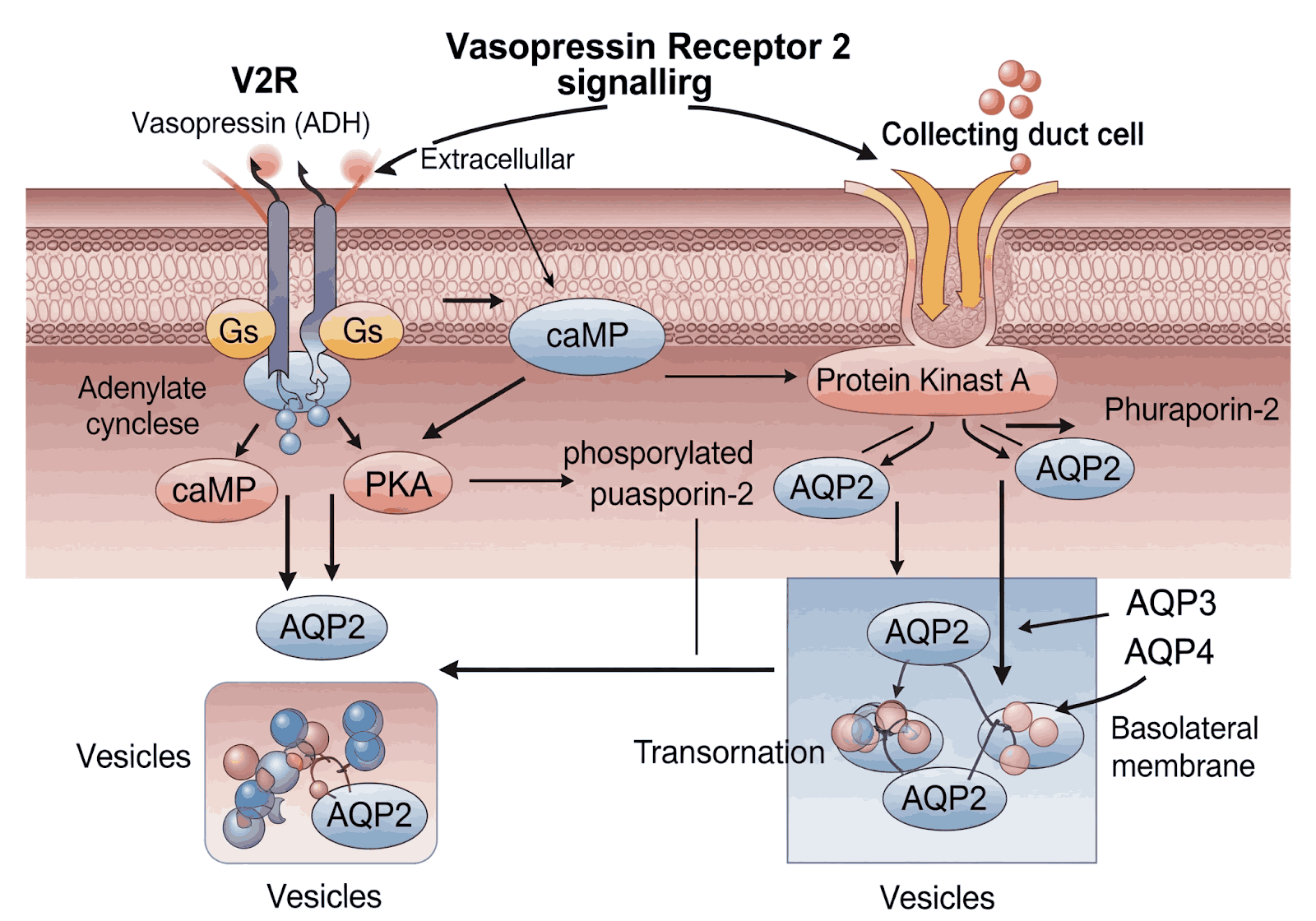
The avpr v2 antibody is an immunological tool used to detect and study the Arginine Vasopressin Receptor 2 (AVPR2), a G-protein coupled receptor (GPCR) critical to water homeostasis in the kidney. AVPR2 mediates the antidiuretic effects of vasopressin (also known as ADH) by stimulating aquaporin-2 (AQP2) insertion into the collecting duct of the nephron. Disruption of this signaling pathway is the underlying cause of nephrogenic diabetes insipidus (NDI), making the AVPR2 antibody an essential reagent in renal and endocrine research.
Biological Background: AVPR2 and Vasopressin Signaling
AVPR2 is a seven-transmembrane receptor located primarily in the principal cells of the renal collecting duct. Upon binding arginine vasopressin, AVPR2 activates adenylyl cyclase via Gs protein coupling, elevating intracellular cAMP levels. This cascade leads to PKA activation and AQP2 phosphorylation, resulting in increased water permeability and reduced urine output.
Mutations in the AVPR2 gene are responsible for X-linked NDI, a rare condition characterized by inability to concentrate urine despite elevated vasopressin. The AVPR2 pathway also has roles in cardiovascular regulation and platelet function, broadening its research relevance beyond nephrology.
What Is the AVPR2 Antibody?
The vasopressin receptor 2 antibody is a research-grade antibody targeting specific epitopes on the AVPR2 protein. It is available in both monoclonal and polyclonal formats, with different clones validated for different applications.
Key Applications of AVPR2 Antibody
Immunohistochemistry (IHC)
AVPR2 antibodies validated for IHC allow researchers to localize receptor expression in kidney tissue sections. This is critical for comparative studies between healthy tissue and NDI patient samples, as well as animal model characterization.
Western Blotting
Western blot applications enable detection and semi-quantification of AVPR2 protein expression across different renal cell populations, disease states, or treatment conditions. Monoclonal antibodies are generally preferred here for their higher specificity.
ELISA
AVPR2 ELISA formats utilize the antibody in sandwich configurations for quantitative measurements. Researchers studying receptor regulation, trafficking, or expression changes in response to pharmacological interventions frequently use ELISA-based approaches.
GPCR Signaling Studies
As a validated GPCR antibody, AVPR2-targeting reagents are used in co-immunoprecipitation (co-IP) and flow cytometry to map receptor interactions with downstream effectors or assess receptor internalization patterns in response to ligand stimulation.
Choosing the Right AVPR2 Antibody
When selecting an avpr v2 antibody for your application, consider the following: the species reactivity (human, mouse, rat), the validated applications listed in the product datasheet, and whether the antibody has been tested on relevant sample types (FFPE tissue, cell lysates, native protein). For aquaporin signaling studies involving co-detection with AQP2, confirming that the antibody’s secondary detection system does not cross-react is essential.
Role of AVPR2 Antibody in Disease Modeling and Drug Research
Beyond basic detection, the avpr v2 antibody plays a critical role in disease modeling and therapeutic research. In studies of nephrogenic diabetes insipidus (NDI), AVPR2 antibodies are used to evaluate receptor expression, misfolding, and intracellular trafficking defects caused by genetic mutations. This is particularly important when testing pharmacological chaperones or small molecules aimed at restoring proper receptor function.
In drug discovery, AVPR2 antibodies help assess how candidate compounds influence receptor activation, desensitization, and internalization. These insights are essential for developing targeted therapies that modulate vasopressin signaling without off-target effects.
Conclusion
The AVPR2 antibody is a versatile and essential tool for researchers investigating renal water handling, GPCR biology, and related pathologies such as NDI. Selecting antibodies with comprehensive validation data across multiple applications and species ensures that experimental results are robust and reproducible. With expanding interest in targeting AVPR2 pharmacologically, demand for high-quality research-grade antibodies in this space continues to grow.
 Renuka
  Kate Willson