
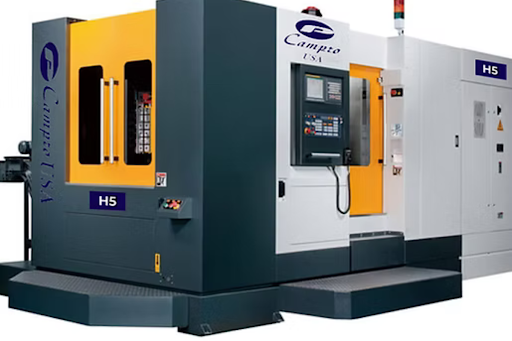
In modern manufacturing, precision and efficiency are the driving forces behind success. One of the most essential pieces of equipment for achieving these goals is the vertical machining center. Known for its ability to perform multiple operations like milling, drilling, tapping, and boring, this machine is a staple in industries such as aerospace, automotive, and medical device production. What makes it particularly powerful is its integration of automatic tool changers, which reduce downtime and enable seamless transitions between tasks.
Why Tool Changers Are Essential
Tool changers in machining centers are not just accessories—they are critical components that directly affect cycle times and productivity. Without tool changers, operators would need to manually swap tools between operations, leading to increased labor, human error, and costly delays. By automating this process, vertical machining centers ensure that production runs smoothly, accurately, and at scale.
Types Of Tool Changers In Machining Centers
Drum-Style Tool Changers
Drum-style changers are compact and often used in small to medium-sized machining centers. They provide quick access to a moderate number of tools, making them suitable for facilities handling diverse but not overly complex projects.
Chain-Style Tool Changers
For larger operations, chain-style changers can hold dozens or even hundreds of tools. They are ideal for high-volume production environments where flexibility and continuous machining are critical.
Carousel Tool Changers
Common in many vertical machining centers, carousel changers provide an efficient balance between tool capacity and speed. Their circular design allows rapid indexing and minimizes tool retrieval times.
Advantages Of Tool Changers In Vertical Machining Centers
Reduced Downtime
Automatic tool changers minimize idle times by instantly swapping tools. This keeps the spindle engaged in cutting operations for a greater percentage of the production cycle.
Enhanced Accuracy
Manual tool changes can lead to misalignment or tool placement errors. Automated changers eliminate this risk, ensuring consistent precision throughout the machining process.
Increased Productivity
With multiple tools preloaded and ready for use, manufacturers can run longer production cycles without interruptions. This boosts overall output and enables faster delivery times.
Improved Safety
By reducing the need for manual intervention, tool changers lower the risk of workplace injuries associated with handling sharp or heavy tools during production.
Tool Changers And Complex Machining Operations
Modern products often require intricate machining that involves multiple cutting tools. A single part might demand operations such as drilling, contouring, slotting, and finishing, each requiring a different tool. Tool changers make it possible to complete these steps in one continuous cycle, eliminating the need for repositioning and minimizing part setup times. This not only improves efficiency but also enhances accuracy by reducing tolerance variations.
Role In Lean Manufacturing
Tool changers play a vital role in lean manufacturing strategies, where efficiency and waste reduction are top priorities. By reducing non-productive activities such as manual tool changes and setup delays, vertical machining centers equipped with tool changers help manufacturers meet lean objectives. They also contribute to lower operating costs, improved machine utilization rates, and better resource management.
Factors To Consider When Selecting Tool Changers
Tool Capacity
The number of tools needed depends on the complexity of parts being produced. Facilities handling a wide variety of products may benefit from larger tool magazines.
Speed Of Changeover
High-speed tool changers are essential for industries where seconds matter, such as automotive and aerospace manufacturing.
Machine Compatibility
Different vertical machining centers support specific types of tool changers. Ensuring compatibility is crucial for achieving optimal performance and avoiding integration issues.
Maintenance Requirements
Reliable tool changers require regular inspection and preventive maintenance to ensure long-term accuracy and durability. Choosing a robust system reduces the risk of costly downtime.
Future Trends In Tool Changer Technology
The evolution of smart manufacturing is driving new innovations in tool changers. Advanced systems now incorporate sensors and monitoring technologies to track tool wear, predict failures, and optimize change sequences. With the rise of Industry 4.0, tool changers are becoming more intelligent and integrated, enabling greater automation and data-driven decision-making.
Conclusion
Automatic tool changers are indispensable for maximizing the productivity of vertical machining centers. They not only streamline workflows and reduce downtime but also enhance precision, safety, and long-term cost savings. As industries move toward smarter and more automated manufacturing solutions, tool changers will continue to play a pivotal role in achieving higher efficiency and output. For facilities that aim to balance speed with flexibility, combining tool-changing technology in vertical machining centers with complementary systems like a CNC turning center ensures a competitive edge in modern production.
 David Martinez
  Kate Willson