
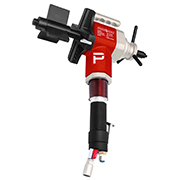
A pipe facing machine is an important part of a high-pressure piping system, especially in industries like oil & gas, power production, and chemical industries, where high stresses are encountered and there should be no failures at any cost. A minor flaw in the pipe welds can cause a pressure leak, creating a dangerous situation. Research on pipe failure cases reveals that most weld flaws stem from improper surface preparation prior to welding. That’s where a pipe facing machine plays an important role.
Let’s see why a pipe facing machine is beneficial for a high-pressure pipe weld.
1. Helps in Achieving Precise, Square Cuts
A pipe-facing machine cuts off the edge of the pipe in such a manner that it lies perfectly at a right angle to the pipe’s axis. By ensuring that the edges of the pipes meet at a perfect right angle when joined, one can apply the weld bead evenly around the pipe’s edge. If the edges were not straight, one would have to rely on the manual process.
2. Eliminates the Problem of Contamination
The pipe often comes with mill scale, rust, oxidation, or other surface defects near the cut edge. Such contamination weakens the welded joint because it is difficult to remove during welding. With a pipe facing machine, one gets clean base metal for welding.
3. Consistent Bevel Angle Formation
In several welding techniques, a specific bevel angle must be formed at the end of the pipe to ensure adequate penetration by the welding rod. The pipe facing machine will provide accurate and repeatable bevel formation. Consistent beveling of all pipe ends means welders can use the same welding method every time, since there is no variation in the ends.
4. Minimize Rework and Inspection Failures
High-pressure pipes usually have very stringent inspection requirements, including radiographic or ultrasonic tests. Poorly fitting joints and contamination result in failure of such tests, causing additional costs in rework and project delays. Since a pipe facing machine ensures clean pipe ends before welding, the probability of a successful first-pass weld increases.
5. Supporting Safety in Critical Systems
In industries where piping carries hazardous materials or operates under extreme pressure weld integrity is directly tied to worker and facility safety. A weak joint is not just a maintenance issue. It is a potential safety hazard. Proper pipe end preparation significantly reduces this risk and gives engineers as well as inspectors greater confidence in the system’s long-term performance.
Conclusion
Weld quality in high pressure piping depends heavily on how well the pipe ends are prepared before the welding process begins. A pipe facing machine ensures square cuts, clean surfaces and accurate bevel angles, all of which contribute to stronger and more reliable joints.
Alongside pipe bevellers which shape the weld-ready edge for proper fusion, this equipment plays a central role in preventing weld failures and supporting the safety and durability of critical piping systems.
 David Martinez