
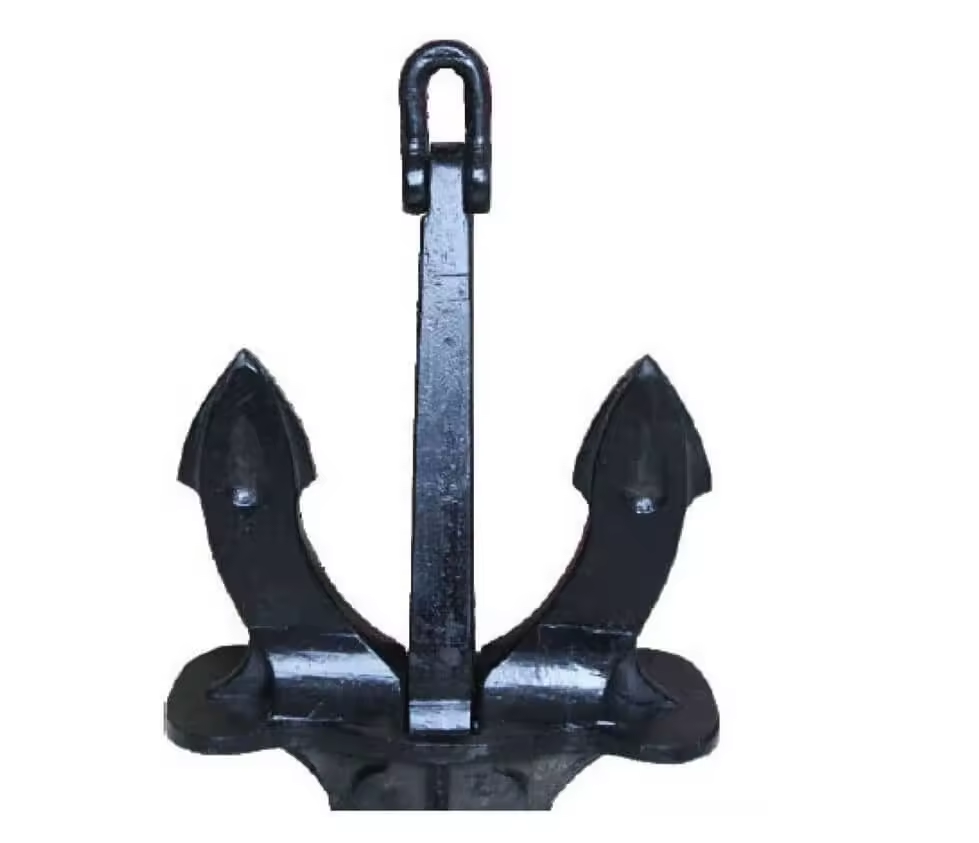
Reliability and consistent performance in a range of water conditions are essential for modern marine operations. For commercial ships, military ships, and offshore installations, the conventional stockless anchor has emerged as the go-to option in the worldwide maritime sector. Compared to conventional anchor types, this tried-and-true design has several advantages and gives the dependability that marine professionals need.
Outstanding Reliability and Holding Power
The holding power of standard stockless anchor is remarkable for their weight. By achieving deep penetration into the bottom, the anchor’s design generates a vast surface area of contact that efficiently distributes stresses. This feature is especially useful when ships are subjected to severe weather, shifting wind patterns, or powerful currents.
In good holding ground, the holding power coefficient of a basic stockless anchor usually falls between three and five times its weight. Because of its superior performance over many conventional anchor designs, maritime operators can feel secure using its anchoring system. Long-term anchoring operations are further enhanced by the anchor’s self-resetting capability if it is dragged.
Experts in the maritime industry appreciate that standard stockless anchors can operate dependably in a range of bottom situations. A single vessel doesn’t need as many different kinds of anchors because of its adaptability.
Knowledge of the Typical Stockless Anchor Design
Compared to earlier anchor designs that depended on external stocks for correct orientation, the conventional stockless anchor marks a fundamental shift. There is no need for a detachable stock with this sort of anchor because of its streamlined form, which connects the shank to the crown directly. When the anchor chain is tensioned, the flukes are made to automatically spin and delve into the seafloor.
Maritime operators encounter a number of real-world issues that this design innovation attempts to solve. A vessel’s hawsepipe can accommodate the anchor entirely in the absence of a stock, resulting in a sleek hull profile that lowers drag when navigating. The capacity to store items in a small space also removes the possibility of misplacing or breaking external parts in inclement weather.
A conventional stockless anchor’s holding power is determined by how well it can bury itself in the ocean floor. The flukes can pierce a variety of bottom conditions, from firm sand to soft mud, thanks to their precise angle engineering. Once the anchor is installed, it develops resistance against both vertical and horizontal loads, giving it significant holding strength.
Commercial Vessel Operational Benefits
Beyond just holding power, ordinary stockless anchors offer further operational advantages. The design makes deployment and retrieval operations more efficient, which results in shorter anchoring procedures and less crew workload. The anchor makes deck operations easier and requires less maintenance because it can be fully stored inside the hawse pipe, negating the need for exterior securing devices.
When comparing modern stockless anchors to previous systems, crew safety is much improved. During anchor handling procedures, the danger of damage is decreased when protruding stocks are absent. Additionally, the streamlined form removes projections and sharp edges that could catch lines or equipment during deployment and recovery operations.
Since port expenses and schedule compliance have a direct impact on profitability, time efficiency becomes a critical component of commercial operations. Typical stockless anchors set and deploy quickly, enabling ships to create secure anchorages with little delay. Additionally, the anchor’s design facilitates the retrieval process by breaking out cleanly from most bottom conditions without requiring significant chain tension.
Advantages of Maintenance and Durability
The standard stockless anchor requires less upkeep than anchors with detachable parts. Pins, stocks, and other detachable components that need frequent inspection and repair are eliminated by the integrated design. Because of this simplification, there is less chance of component failure during crucial anchoring procedures, which lowers maintenance expenses.
Surface treatments and dimensional examinations are the major components of routine maintenance protocols for conventional stockless anchors. Schedules for lubrication and component adjustments are no longer necessary because there are no moving parts. This ease of maintenance results in reduced lifetime expenses and increased operational accessibility.
Dubai as a Crucial Location for Hall Anchor Providers
Serving the expanding Middle Eastern shipping sector and linking European manufacturers with Asian markets, Dubai has made a name for itself as a leading marine supply hub. For large anchor providers catering to the local market, the emirate is a perfect foundation due to its advantageous location at the intersection of important shipping lines.
Verification of Quality from Reputable Vendors
International marine requirements are in line with the stringent quality control standards upheld by reputable hall anchor suppliers in Dubai. Most of the time, these suppliers get their goods from certified producers who meet international criteria like those set by the International Association of Classification Societies as well as classification society requirements.
Some of the examples of quality assurance processes are dimensional verification, performance testing, and material certification. Trusted vendors are able to provide detailed documentation packages containing manufacturing reports, compliance reports and material certificates. This paperwork turns out to be crucial for insurance obligations and vessel inspections.
Experienced Dubai Hall anchor supplier operations are able to provide technical support that goes beyond simple product delivery. Replacement part availability, maintenance advice, and installation instructions are frequently offered by these companies. They can suggest suitable anchor specifications for individual applications because their technical staff is aware of the unique needs of various vessel types.
Profitability and Value Proposition
Comparing ordinary stockless anchors to other anchor designs, the total cost of ownership is favorable. Even while it might cost more to buy initially than some standard anchors, there will be long-term cost advantages due to the lower maintenance needs and increased operating effectiveness.
Competitive pricing is provided by Dubai Hall anchor supplier networks thanks to their effective distribution networks and strategic sourcing partnerships. There is pricing competition while upholding quality standards when there are several vendors in the market. Flexible payment schedules and alternatives for bulk purchases further improve the value proposition for business owners.
Conclusion
The likelihood of anchoring failures that could cause environmental problems, cargo loss, or vessel damage is decreased by the dependability of ordinary stockless anchors. Because of its dependability, insurance premiums are lowered and liability claims are decreased. The additional benefit that comes from employing tried-and-true anchoring technology goes beyond straightforward cost comparisons.
 Renuka