
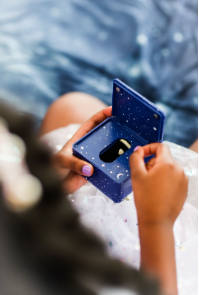
Losing a baby tooth is a cherished milestone in childhood, often marked by family traditions that turn a potentially scary experience into a magical event. One of the most popular rituals associated with this event in many Western cultures is the visit from the Tooth Fairy. Over the years, the fairy tooth box has become a symbolic and practical item in this tradition, playing an increasingly important role. But did you know that tooth-related customs vary widely across the globe? In this post, we’ll explore global traditions surrounding lost teeth and explain why the tooth box for tooth fairy continues to hold significance in modern parenting.
The Tooth Fairy Tradition in the West
In the United States, Canada, and much of Western Europe, the story goes like this: when a child loses a tooth, they place it under their pillow at night. While they sleep, the Tooth Fairy visits and exchanges the tooth for money or a small gift. Though the tradition is fairly recent—first popularized in the 20th century—it has gained widespread appeal.
Over time, many parents have embraced a new version of this tradition by using a tooth fairy box. Instead of tucking the tooth under a pillow, children now place their tooth inside a fairy tooth box—often a decorative, personalized container. These boxes keep the tooth secure and make the Tooth Fairy’s job easier, especially if the child is a light sleeper.
Fairy Tooth Box: A Practical Evolution
While the origin of the fairy tooth box is relatively modern, its growing popularity is rooted in both function and sentimentality. Small enough to fit beside the bed, the box adds a sense of ceremony and magic to the event. It also offers a neat and hygienic way to store a baby tooth—especially important when you consider how small and easy-to-lose these teeth can be.
Many parents also opt for a tooth box for tooth fairy that doubles as a keepsake holder. These boxes often come with slots labeled for each tooth, allowing parents to collect and preserve all their child’s baby teeth in one special place.
Tooth Traditions Around the World
While the Western world celebrates the Tooth Fairy, other cultures have unique customs tied to lost teeth. These international traditions highlight how universal—and diverse—this childhood milestone truly is.
Japan
In Japan, children traditionally throw their lower baby teeth onto the roof and upper teeth beneath the house. The belief is that this practice will encourage the new teeth to grow straight and strong. The ritual is not linked to any mythical creature but is an important part of local custom.
Middle East
In many Middle Eastern countries such as Egypt, Jordan, and Iraq, children throw their baby teeth toward the sun while reciting a rhyme asking the sun to exchange their tooth for a better one. This tradition has its roots in ancient Islamic folklore, with no monetary exchange involved.
India
In parts of India, children throw their teeth on the roof as well, often asking birds or animals to take the old tooth and bring them a new one. The ritual is steeped in superstition and is passed down through generations.
South America
In several South American countries, including Argentina and Colombia, the tradition involves a character named “El Ratón Pérez” or “Ratoncito Pérez”—a small mouse who collects children’s teeth from under their pillows and leaves a gift or money in return. Here too, families may use a tooth fairy box as part of the ritual, though it’s associated with a mouse rather than a fairy.
Africa
Some African cultures, such as in Nigeria and South Africa, practice tooth rituals that involve planting or burying the tooth to promote strong adult teeth. While the symbolic use of a fairy tooth box is less common, modern urban families are adopting Western-style traditions, integrating them with local customs.
Why the Fairy Tooth Box Matters Today
As global families become more interconnected and Western customs continue to influence parenting traditions, the fairy tooth box has become a staple in many households—not only in the U.S. and Europe but also in urban areas around the world. The appeal lies in its ability to make the experience of losing a tooth more organized, memorable, and magical.
Furthermore, using a tooth box for tooth fairy allows for customization and personalization. Parents can choose from wooden, plastic, or metal boxes; some come engraved with the child’s name, while others feature whimsical designs or compartments for each lost tooth. These boxes also serve as charming keepsakes long after the child has stopped believing in the Tooth Fairy.
Conclusion
The tradition of celebrating lost baby teeth is as old as humanity itself, but its expressions vary widely from one culture to another. Whether it’s tossing teeth to the roof, feeding them to animals, or hiding them under a pillow for a fairy or a mouse, the significance remains the same: it’s a rite of passage that marks growing up. In today’s world, the box for tooth fairy stands as a meaningful symbol, blending tradition with modern practicality. It transforms a fleeting moment into a cherished memory—one tiny tooth at a time.
 David Martinez
  Renuka